
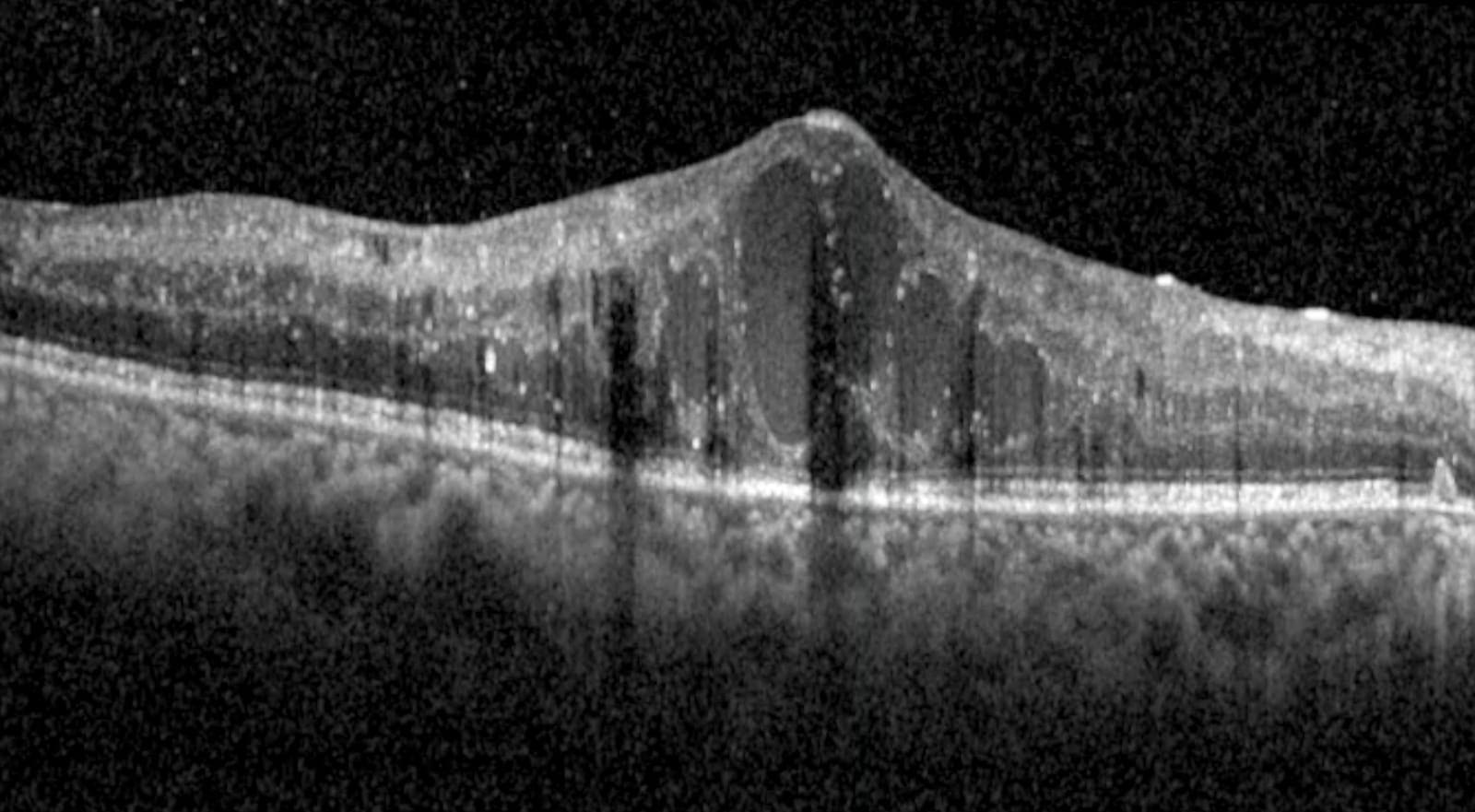
Diabetic macular oedema (DMO) is a complication of diabetes in which fluid accumulates in the macula, the central part of the retina responsible for detailed vision. It can occur at any stage of diabetic retinopathy and is an important cause of reduced vision in people with diabetes.
Condition · Medical retina
Diabetic macular oedema
A complication of diabetes that affects vision
Overview
Symptoms
Diabetic macular oedema can cause blurred or distorted central vision, difficulty reading, and changes in colour perception. In some cases, it may progress without noticeable symptoms, particularly in the early stages.
Risk factors
The main risk factors for developing diabetic macular oedema include poor glycaemic control (high HbA1c), longer duration of diabetes, and more advanced stages of diabetic retinopathy. In addition, hypertension, kidney disease, and hyperlipidaemia significantly increase the risk. Pregnancy in women with pre-existing diabetes is also considered an additional risk factor.
How is it diagnosed?
Diagnosis is based on a comprehensive eye examination and OCT, which provides detailed images of the macula and enables the detection of fluid accumulation. Depending on the individual case, additional investigations may be required, such as OCT angiography or fluorescein angiography.
Treatment
Treatment depends on the severity of the oedema and the overall retinal condition. It may include:
- Intravitreal anti-VEGF injections, which are the main treatment for many patients
- Intravitreal corticosteroids in selected cases
- Laser treatment in specific situations
- Optimisation of blood sugar, blood pressure and cholesterol
Treatment often requires several injections and regular OCT monitoring.
When to seek an assessment
People with diabetes should have regular retinal screening, even if their vision is normal.
You should seek specialist assessment if you notice new or worsening blurred or distorted central vision, difficulty reading, or any change in your vision.
Early diagnosis and treatment can help prevent further retinal damage and preserve vision.
Key points
- Diabetic macular oedema is caused by fluid accumulation in the macula.
- It can cause blurred or distorted central vision, although it may initially cause no noticeable symptoms.
- OCT is the key test for diagnosis and monitoring.
- Intravitreal anti-VEGF injections and other treatments, when appropriate, can reduce macular oedema and help preserve or improve vision.
Talk it through with Dr. Diafas.
Early assessment helps guide the choice of the most appropriate treatment.
This page provides general information only and is not a substitute for an individual consultation.