
Dr. Asterios Diafas
Ocular OncologyVitreoretinal Surgery
+30 694 240 6078asterisdiafas@hotmail.com
Condition · Vitreoretinal surgery

Vitreous haemorrhage

Bleeding inside the eye

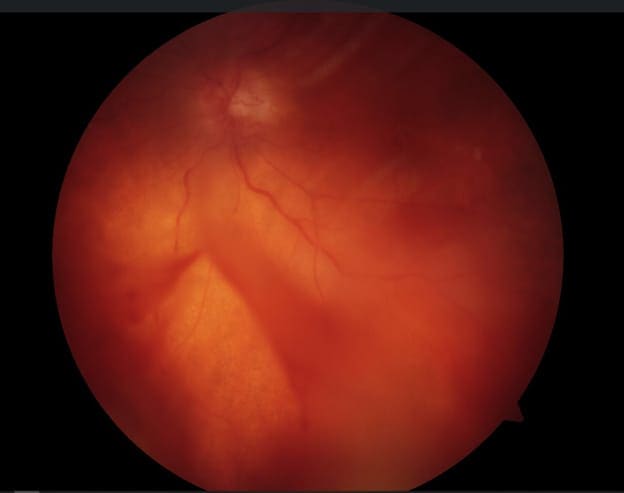
Clinical image — Vitreous haemorrhage.
Overview

A vitreous haemorrhage occurs when blood enters the vitreous, the clear gel that fills the inside of the eye. It can cause sudden visual symptoms and has several possible causes, including retinal tears, retinal detachment, diabetic retinopathy and retinal vein occlusion.

A vitreous haemorrhage should be assessed promptly to identify and treat the underlying cause.

Symptoms

Vitreous haemorrhage can occur suddenly and is painless. Symptoms may include:

  • Sudden onset of numerous floaters (“spots” or “flies”)
  • Blurred vision or a significant reduction in vision
  • Dark spots or “cobwebs” in the visual field
  • In cases of extensive haemorrhage, severe vision loss may occur
Risk factors

The main conditions and factors associated with vitreous haemorrhage include diabetic retinopathy, retinal tears or detachment, retinal vein occlusion, ocular trauma or previous eye surgery, high myopia, as well as certain inflammatory or vascular disorders of the eye.

How is it diagnosed?

Diagnosis is based on an immediate and detailed ophthalmic examination, usually after pupil dilation. It is important to identify the cause of the haemorrhage and rule out the presence of a retinal tear or detachment.

When the haemorrhage prevents direct visualisation of the retina, ocular ultrasound can help assess the retina and identify any associated retinal pathology.

Treatment

Treatment depends on the cause, extent of the haemorrhage, and condition of the retina. In some cases, particularly when the haemorrhage is limited and there is no retinal tear or detachment, close observation may be recommended, as the blood may gradually be reabsorbed.

When the haemorrhage is associated with neovascularisation, intravitreal anti-VEGF injections or laser photocoagulation may be required, depending on the underlying cause. In cases of persistent or extensive haemorrhage, or when a retinal tear or detachment is present, vitrectomy may be required.

When to seek an assessment

The sudden onset of numerous new floaters, flashes of light, or a sudden reduction in vision requires urgent ophthalmic assessment. Prompt examination is particularly important, as vitreous haemorrhage may be associated with a retinal tear or detachment.

Key points
  • Vitreous haemorrhage is bleeding inside the eye.
  • It can be caused by retinal tear, diabetic retinopathy, retinal vein occlusion and other conditions.
  • A careful peripheral retinal examination is essential to exclude a retinal tear or detachment.
  • Treatment depends on the underlying cause and may range from observation to laser, injections or vitrectomy.

Talk it through with Dr. Diafas.

For non-urgent assessment, monitoring of risk factors, or a second opinion after treatment, book an appointment. If you experience sudden symptoms, seek urgent medical attention immediately on the same day — do not use the contact form.

This page provides general information only and is not a substitute for an individual consultation.

Book an appointment