
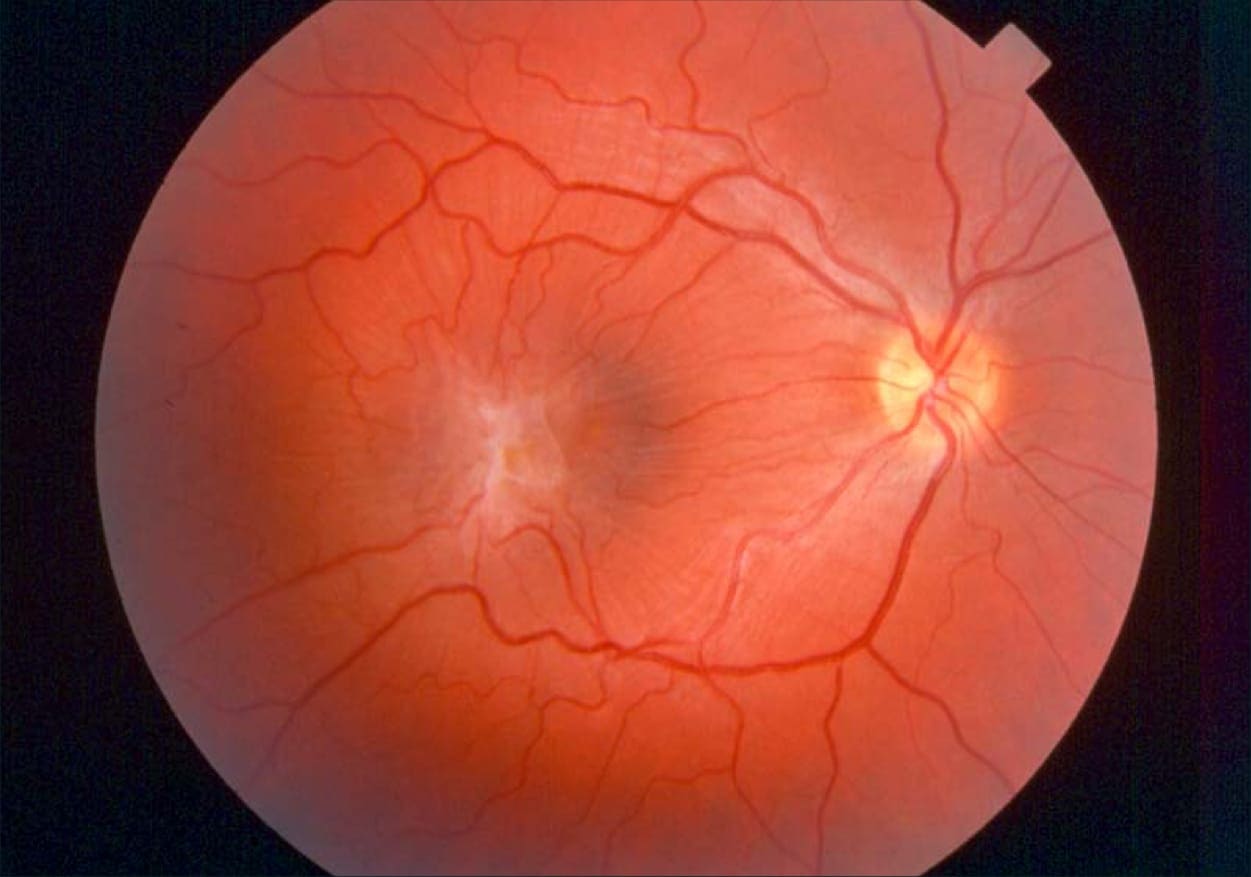
An epiretinal membrane (ERM) is a thin layer of scar-like tissue that develops on the surface of the retina, usually over the macula. It can contract and distort the retinal surface, affecting central vision. ERMs are more common with increasing age and may also develop after retinal surgery, inflammation, trauma or other retinal conditions.
Condition · Vitreoretinal Surgery
Epiretinal membrane
Μεμβράνη στην επιφάνεια της ωχράς κηλίδας
Overview
Symptoms
Some ERMs cause no symptoms. When symptoms occur, they may include:
- Blurred or reduced central vision
- Distortion, with straight lines appearing bent or wavy
- Difficulty reading or recognising fine detail
- Difficulty with tasks requiring precise vision
Risk factors
An epiretinal membrane occurs more frequently with increasing age, as it is associated with age-related changes in the vitreous. The risk is also increased in individuals with a history of retinal detachment or retinal tears, ocular inflammation, diabetic retinopathy, retinal vein occlusion, as well as in those who have undergone previous eye surgery or experienced ocular trauma. In many cases, however, the condition develops without an identifiable underlying cause.
How is it diagnosed?
Diagnosis is based on a comprehensive eye examination and macular OCT. OCT provides detailed imaging of the membrane and allows assessment of its effect on the retinal layers.
Treatment
If symptoms are mild and vision is stable, observation with regular examinations and OCT monitoring is often appropriate.
If the membrane causes significant visual distortion or reduced vision that affects daily activities, vitrectomy surgery with removal of the epiretinal membrane may be considered. The decision to operate depends on symptoms, visual function and the appearance of the macula.
When to seek an assessment
If you notice new or progressive blurring or distortion of your central vision, particularly if straight lines appear wavy, it is important to have an eye examination. OCT helps establish an accurate diagnosis and assess the severity of the membrane.
If you have been diagnosed with an epiretinal membrane, discuss the most appropriate management with a specialist vitreoretinal surgeon, based on your symptoms and OCT findings.
Key points
- Epiretinal membrane is a thin layer of tissue that develops on the macula, at the centre of the retina.
- It can cause blurred or distorted central vision, although some patients have no symptoms.
- OCT is the key imaging test for diagnosis and monitoring.
- Surgery may be considered when symptoms significantly affect vision or daily activities.
Read also
Talk it through with Dr. Diafas.
For an assessment of the epiretinal membrane and discussion of the available treatment options.
This page provides general information only and is not a substitute for an individual consultation.