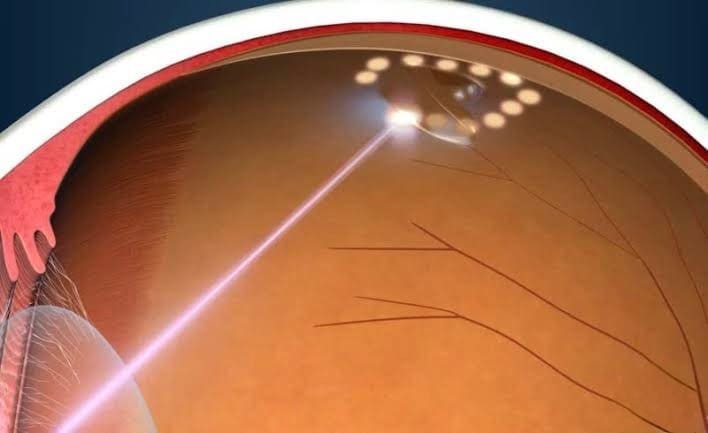
Retinal laser photocoagulation is a treatment used to manage certain retinal tears, lesions and peripheral retinal changes. Using a specialised laser, small, controlled spots are applied around the area requiring protection. This creates a controlled scar that helps stabilise the retina and reduce the risk of a retinal tear progressing or retinal detachment developing.
Retinal laser photocoagulation is performed without a surgical incision, using eye drops to dilate the pupil and local anaesthesia. The treatment is usually brief and may cause temporary discomfort or blurred vision for a short period. Following treatment, a scar barrier gradually forms around the retinal lesion, helping to stabilise the retina. Patients can usually return to their normal daily activities, according to their doctor’s advice.
Who it is for
Laser treatment may be recommended for patients with retinal tears, as well as certain peripheral degenerative changes or other retinal lesions considered to increase the risk of retinal detachment. The decision to perform laser treatment is individualised following a detailed examination of the peripheral retina and assessment of the characteristics of the lesion and the individual patient's risk factors.