
Dr. Asterios Diafas
Ocular OncologyVitreoretinal Surgery
+30 694 240 6078asterisdiafas@hotmail.com
Condition · Medical retina

Central serous chorioretinopathy

A common cause of transient blurred vision

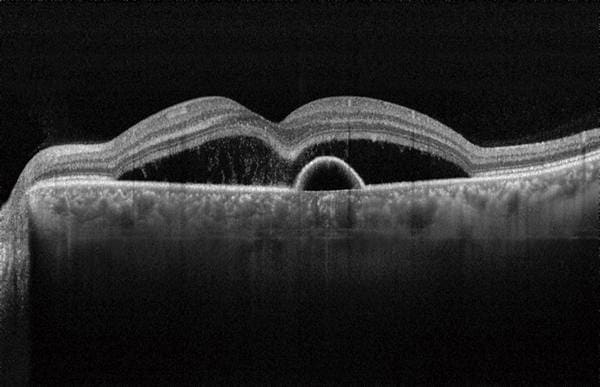
Clinical image — Central serous chorioretinopathy.
Overview

Central serous chorioretinopathy (CSCR) is a retinal condition in which fluid accumulates beneath the retina, usually in the area of the macula. This can affect central vision and cause blurred or distorted vision.

CSCR occurs more commonly in younger and middle-aged adults. In many cases, it resolves spontaneously within a few weeks or months. However, in some patients, the condition may persist or recur and require treatment.

Symptoms

The symptoms usually affect central vision and may appear relatively suddenly. You may notice:

  • Blurred or reduced central vision
  • Distortion of straight lines
  • A dark or blurred area in the centre of your vision
  • Objects appearing smaller or a different size
  • Changes in colour perception

CSCR often affects one eye, but it can also affect both eyes.

Risk factors

The exact cause of central serous chorioretinopathy (CSCR) is not fully understood. One of the most important factors associated with its development is significant or prolonged stress. Another important risk factor is the use of corticosteroids, regardless of the route of administration. Other factors associated with CSCR include high blood pressure, smoking, and certain sleep disorders.

How is it diagnosed?

The diagnosis is based on an eye examination and macular OCT (Optical Coherence Tomography). OCT is a quick and painless examination that provides detailed images of the retina and allows the detection and monitoring of fluid accumulation beneath the retina.

In some cases, additional tests, such as fluorescein angiography, may be required to assess the condition more thoroughly and help guide treatment planning.

Treatment

In many cases, particularly during the first episode, CSCR resolves spontaneously and only regular monitoring with OCT is required.

If the fluid persists, the condition recurs, or significantly affects vision, treatment may be necessary. Photodynamic therapy (PDT) is one of the main treatment options for persistent or chronic CSCR. The most appropriate treatment is selected on an individual basis, depending on the characteristics of the condition.

When to seek an assessment

Schedule an eye examination if you notice new or persistent blurring of your central vision, distortion of straight lines, or changes in the size or appearance of objects.

Sudden and significant loss of vision, the new onset of flashes or floaters, or the appearance of a dark “curtain” in your field of vision requires urgent ophthalmic assessment, as these symptoms may be associated with another emergency retinal condition.

Key points
  • Significant stress and corticosteroid use are important risk factors.
  • Modern retinal imaging provides accurate diagnosis.
  • While many cases resolve spontaneously, persistent forms may require treatment.
  • Regular monitoring is an important part of long-term care.

Talk it through with Dr. Diafas.

For an evaluation, careful monitoring, or a second opinion, book an appointment with Dr Diafas.

This page provides general information only and is not a substitute for an individual consultation.

Book an appointment