
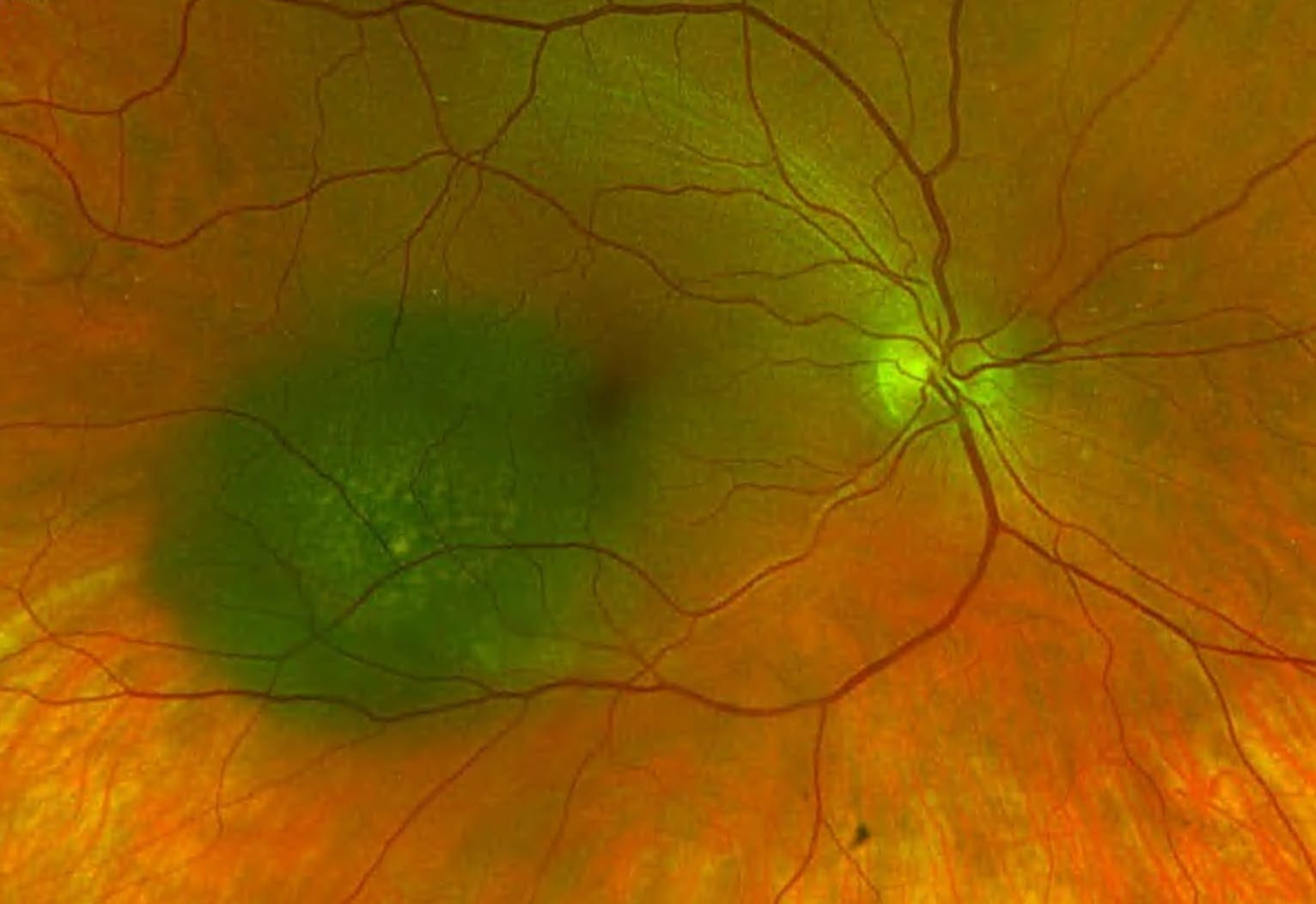
Choroidal melanoma is the most common primary malignant tumour of the eye in adults. It develops from melanocytes within the choroid, the vascular layer beneath the retina. Although uncommon, early diagnosis and appropriate treatment are important for preserving vision and reducing the risk of tumour spread.
Condition · Ocular oncology
Choroidal melanoma
A malignant tumor of the choroid
Overview
Symptoms
Choroidal melanoma may cause no symptoms and can be detected during a routine eye examination. When symptoms occur, they may include:
- Blurred or reduced vision
- Flashes or floaters
- Distortion of vision
- Loss of part of the visual field
Risk factors
Risk factors associated with choroidal melanoma include older age, fair skin, light-coloured eyes, and the presence of pre-existing pigmented lesions such as choroidal naevi. Certain genetic factors and rare hereditary conditions may also increase the risk. In many cases, however, no specific risk factor can be identified.
How is it diagnosed?
Diagnosis is usually based on a detailed ophthalmic examination and ocular imaging. This may include dilated fundus examination, ocular ultrasound, optical coherence tomography (OCT) and fundus photography. In selected cases, additional imaging or a tumour biopsy may be required. Systemic assessment may also be recommended to evaluate for possible spread of the disease, particularly to the liver.
Treatment
Treatment is individualised according to the tumour’s size, location and characteristics, as well as the patient’s general health and visual needs.
The main treatment options include:
- Plaque radiotherapy, commonly using ruthenium-106 or iodine-125
- Proton beam radiotherapy
- Local tumour resection or, when necessary, removal of the eye (enucleation)
Patients also require long-term ophthalmic and systemic follow-up.
When to seek an assessment
You should seek specialist assessment if you develop unexplained visual loss, flashes, new floaters, distortion or a persistent change in your vision.
A specialist assessment is also important when a pigmented or suspicious choroidal lesion has been identified, even if there are no symptoms. Early assessment can help distinguish a benign lesion from a melanoma and guide appropriate monitoring or treatment.
Key points
- Choroidal melanoma is the most common primary malignant tumour of the adult eye.
- It may cause no symptoms and can be detected during a routine eye examination.
- Treatment is highly individualised, with radiotherapy being the most common eye-preserving approach.
- Long-term ophthalmic and systemic follow-up is an important part of care.
Read also
For assessment & follow-up.
For assessment of a pigmented lesion, careful imaging and monitoring, or a second opinion — and for prompt referral into a specialist ocular oncology pathway.
This page provides general information only and is not a substitute for an individual consultation.