
Dr. Asterios Diafas
Ocular OncologyVitreoretinal Surgery
+30 694 240 6078asterisdiafas@hotmail.com
Condition · Ocular oncology

Choroidal Metastasis

Secondary malignant tumors of the choroid

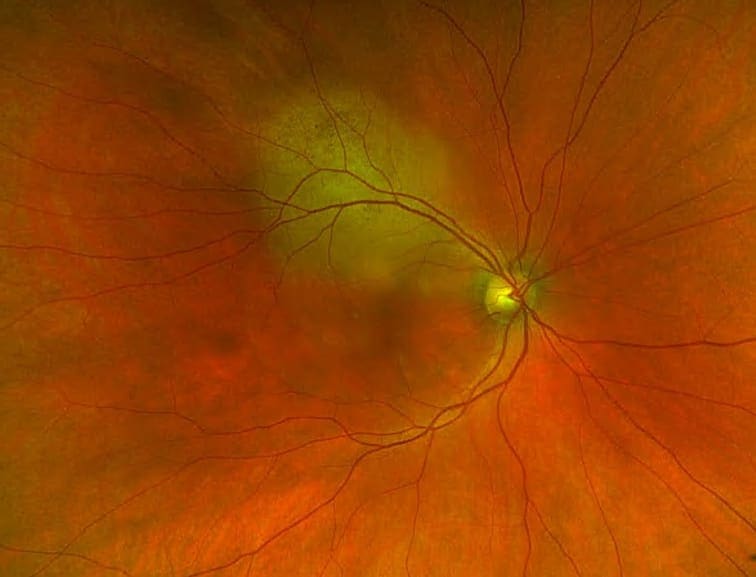
Clinical image — Choroidal metastasis.
Overview

Choroidal metastases are malignant tumours that have spread to the eye from a cancer originating in another part of the body. Due to its rich blood supply, the choroid is the most common site of ocular metastases.

The most common primary cancers that can metastasise to the choroid are breast and lung cancer. In some cases, an ocular metastasis may be the first sign of an underlying cancer that has not yet been diagnosed.

Symptoms

Choroidal metastases may not cause symptoms initially. When they affect vision, symptoms may include:

  • Blurred or reduced vision
  • Distortion of central vision
  • A dark or blurred area in the visual field

Symptoms mainly depend on the size and location of the lesion, particularly whether the macula is affected.

Risk factors

The main risk factor for choroidal metastasis is a history of systemic cancer, particularly breast cancer in women and lung cancer in men. Other malignancies, including gastrointestinal, renal, thyroid and prostate cancers, may also metastasise to the choroid. In some cases, a choroidal metastasis may be the first sign of an undiagnosed systemic malignancy.

How is it diagnosed?

The diagnosis is based on a comprehensive eye examination and modern imaging techniques. OCT, ocular ultrasound, and, in selected cases, angiography help characterise the lesion and establish the diagnosis.

If metastasis is suspected, further systemic investigations may be required to identify the primary tumour or other metastatic sites. Modern imaging significantly improves diagnostic accuracy and enables reliable monitoring of the lesion.

Treatment

Treatment depends on the size and location of the metastasis, the type of primary cancer, and the patient’s overall health.

Management is coordinated with the oncology team and may include systemic anticancer therapy, radiotherapy, or, in selected cases, photodynamic therapy (PDT). Treatment of the primary tumour may also lead to regression of the ocular metastasis.

When to seek expert assessment

When to seek an assessment

Schedule an eye examination if you experience an unexplained change in vision or if any abnormal lesion of the choroid is detected, particularly if you have a known history of cancer. Early assessment and modern imaging techniques contribute to accurate diagnosis and appropriate treatment planning.

Key points
  • In some cases, a choroidal metastasis may be the first manifestation of an underlying cancer.
  • Breast and lung cancers are the most common primary sources.
  • OCT and ocular ultrasound are important for diagnosis and monitoring.
  • Treatment is individualised and may include systemic therapy, radiotherapy, or laser treatment.

Talk it through with Dr. Diafas.

For an evaluation, careful monitoring, or a second opinion, book your appointment.

This page provides general information only and is not a substitute for an individual consultation.

Book an appointment