Dr. Asterios Diafas
Ocular OncologyVitreoretinal Surgery
+30 694 240 6078asterisdiafas@hotmail.com
Condition · Ocular oncology

Choroidal nevus

A common benign lesion of the choroid

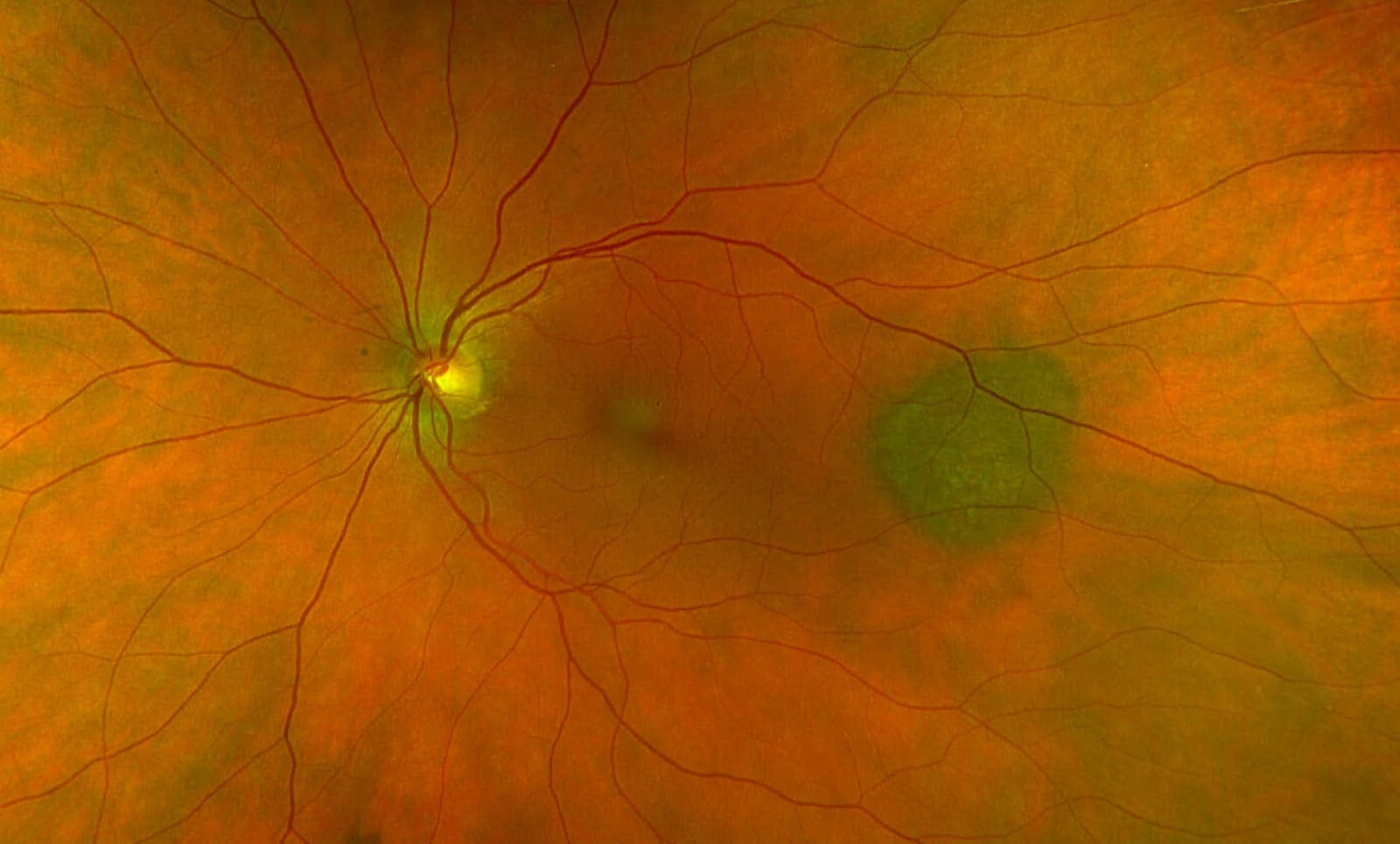
Clinical image — Choroidal nevus.
Overview

A choroidal nevus is a usually benign, pigmented lesion of the choroid, the highly vascular layer located beneath the retina. It is often discovered incidentally during an eye examination and does not usually cause symptoms.

In most cases, it remains stable and does not require treatment. However, regular monitoring is important to detect any changes in its size or characteristics that may require further assessment.

Symptoms

Most choroidal nevi do not cause symptoms. However, when located near the macula or associated with fluid accumulation, they may cause:

  • Blurred or reduced vision
  • Distortion of straight lines
  • A dark or blurred area in the visual field
Risk factors

Risk factors associated with choroidal naevus include increasing age, fair skin, light-coloured eyes, and ultraviolet (UV) exposure. In most cases, however, no specific risk factor can be identified.

How is it diagnosed?

The diagnosis is based on a comprehensive eye examination and modern imaging techniques. OCT, fundus photography, and, when necessary, ocular ultrasound help document the characteristics of the lesion and allow comparison with previous examinations.

Regular monitoring is important, as comparison with previous images can help identify any changes over time.

Treatment

Most choroidal nevi do not require treatment and are managed with regular monitoring. If significant changes or features suspicious for melanoma are detected, a more specialised assessment by an ophthalmologist with expertise in ocular oncology may be required. If the diagnosis is confirmed, appropriate treatment can then be considered.

When to seek an assessment

Schedule an eye examination if you experience a new or unexplained change in vision or if you have been diagnosed with a choroidal nevus that requires monitoring. Modern imaging techniques allow accurate documentation and reliable monitoring of the lesion.

Key points
  • A choroidal nevus is relatively common, affecting approximately 5–10% of adults.
  • Any change in its characteristics or appearance warrants specialist assessment.
  • Modern imaging improves diagnostic accuracy.
  • Early detection of possible malignant transformation and prompt treatment are important for achieving the best possible outcome.

Talk it through with Dr. Diafas.

If a suspicious choroidal lesion has been detected or you would like a second opinion, book an appointment for a specialist assessment.

This page provides general information only and is not a substitute for an individual consultation.

Book an appointment