
Dr. Asterios Diafas
Ocular OncologyVitreoretinal Surgery
+30 694 240 6078asterisdiafas@hotmail.com
Condition · Ocular oncology

Conjunctival carcinoma

Cancerous lesion on the surface of the eye

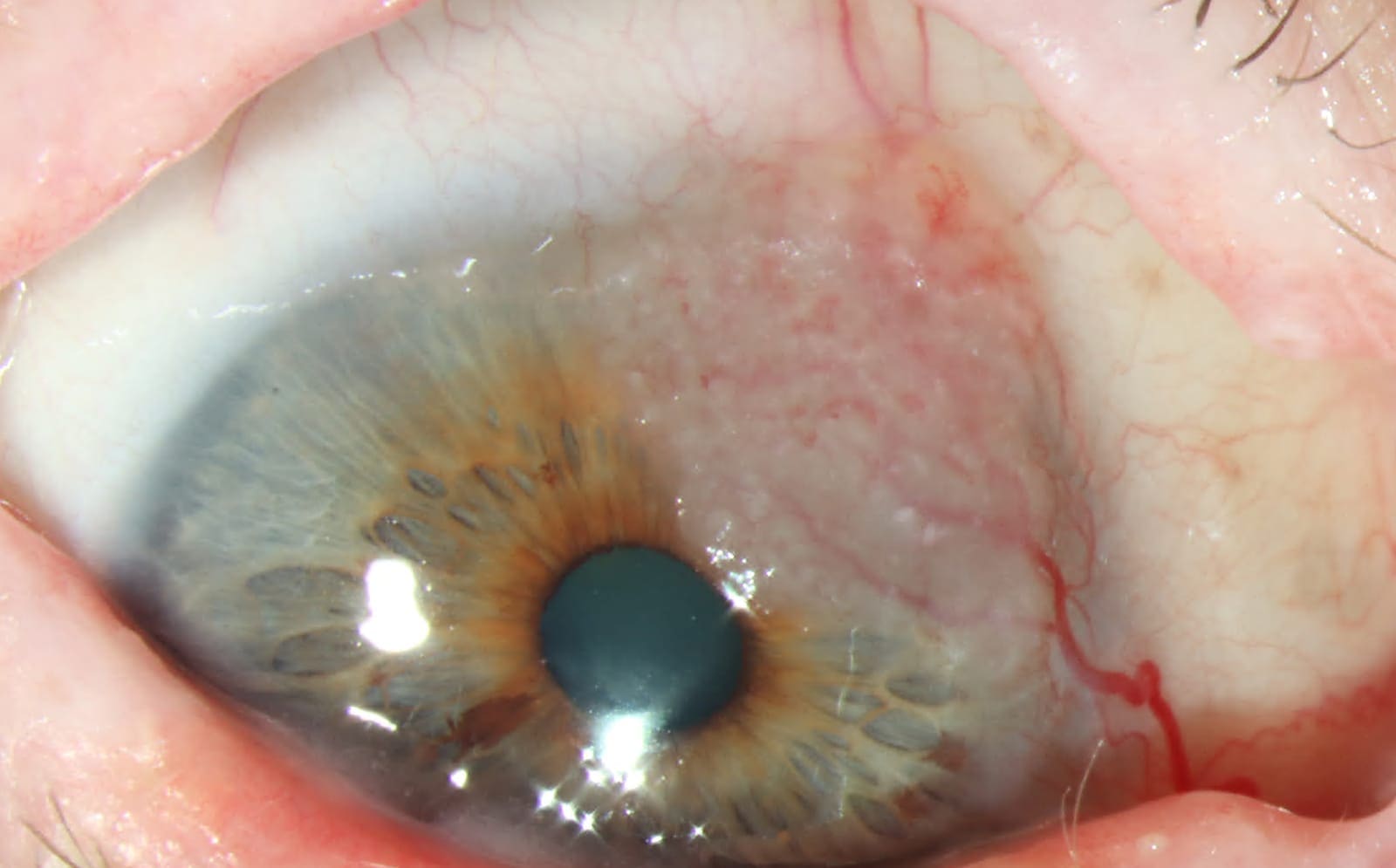
Clinical image — Conjunctival carcinoma.
Overview

Conjunctival carcinoma is a rare malignant tumour that develops from the surface cells of the conjunctiva, the thin membrane that covers the white part of the eye and lines the inner surface of the eyelids. The most common form is ocular surface squamous neoplasia (OSSN), which encompasses a spectrum of lesions ranging from precancerous changes to invasive squamous cell carcinoma.

It usually develops slowly and may resemble a benign or inflammatory lesion, which can make early recognition difficult. Early diagnosis and treatment are important, as in some cases the tumour can extend into the surrounding tissues. Appropriate management helps limit local spread and reduce the risk of recurrence.

Symptoms

Conjunctival carcinoma may present as a new or enlarging lesion on the eye. The most common signs and symptoms include:

  • A white, pink, or red lesion on the conjunctiva
  • A change in the colour or appearance of an existing lesion
  • Persistent redness or irritation
  • A foreign-body sensation or discomfort
  • Less commonly, bleeding or reduced vision
Risk factors

Risk factors associated with conjunctival carcinoma include prolonged ultraviolet (UV) exposure, older age, fair skin, immunosuppression, HIV infection, and human papillomavirus (HPV) infection. Rare genetic conditions such as xeroderma pigmentosum may also increase the risk.

How is it diagnosed?

Diagnosis is based on a careful ophthalmic examination and assessment of the lesion’s characteristics and morphology. When malignancy is suspected, a biopsy and histopathological examination may be required to confirm the diagnosis.

Clinical photography and modern imaging techniques can also help document the lesion and monitor changes over time.

Treatment

Treatment depends on the size, location and extent of the tumour and may include:

  • Surgical excision with appropriate margins
  • Cryotherapy to the surrounding conjunctiva
  • Topical chemotherapy, such as mitomycin C, 5-fluorouracil or interferon alfa-2b
  • Radiotherapy in selected cases
  • Reconstruction of the ocular surface when required

Treatment is individualised, and long-term follow-up is important because recurrence can occur.

When to seek an assessment

You should seek specialist assessment if you notice a persistent, enlarging or changing lesion on the surface of the eye, particularly if it is raised, irregular or associated with persistent redness.

A specialist ocular oncology assessment is recommended for suspicious conjunctival lesions, particularly when they do not respond to treatment for presumed inflammation.

Key points
  • Conjunctival carcinoma is a rare cancer of the ocular surface.
  • A persistent or changing conjunctival lesion should be assessed by an ophthalmologist.
  • Biopsy and histopathological examination are important for confirming the diagnosis.
  • Treatment may include surgery, cryotherapy, topical medication or radiotherapy, with long-term follow-up.

Talk it through with Dr. Diafas.

If a conjunctival lesion has been identified, seek specialist assessment and guidance.

This page provides general information only and is not a substitute for an individual consultation.

Book an appointment