
Dr. Asterios Diafas
Ocular OncologyVitreoretinal Surgery
+30 694 240 6078asterisdiafas@hotmail.com
Condition · Ocular oncology

Conjunctival naevus

A common benign lesion of the ocular surface

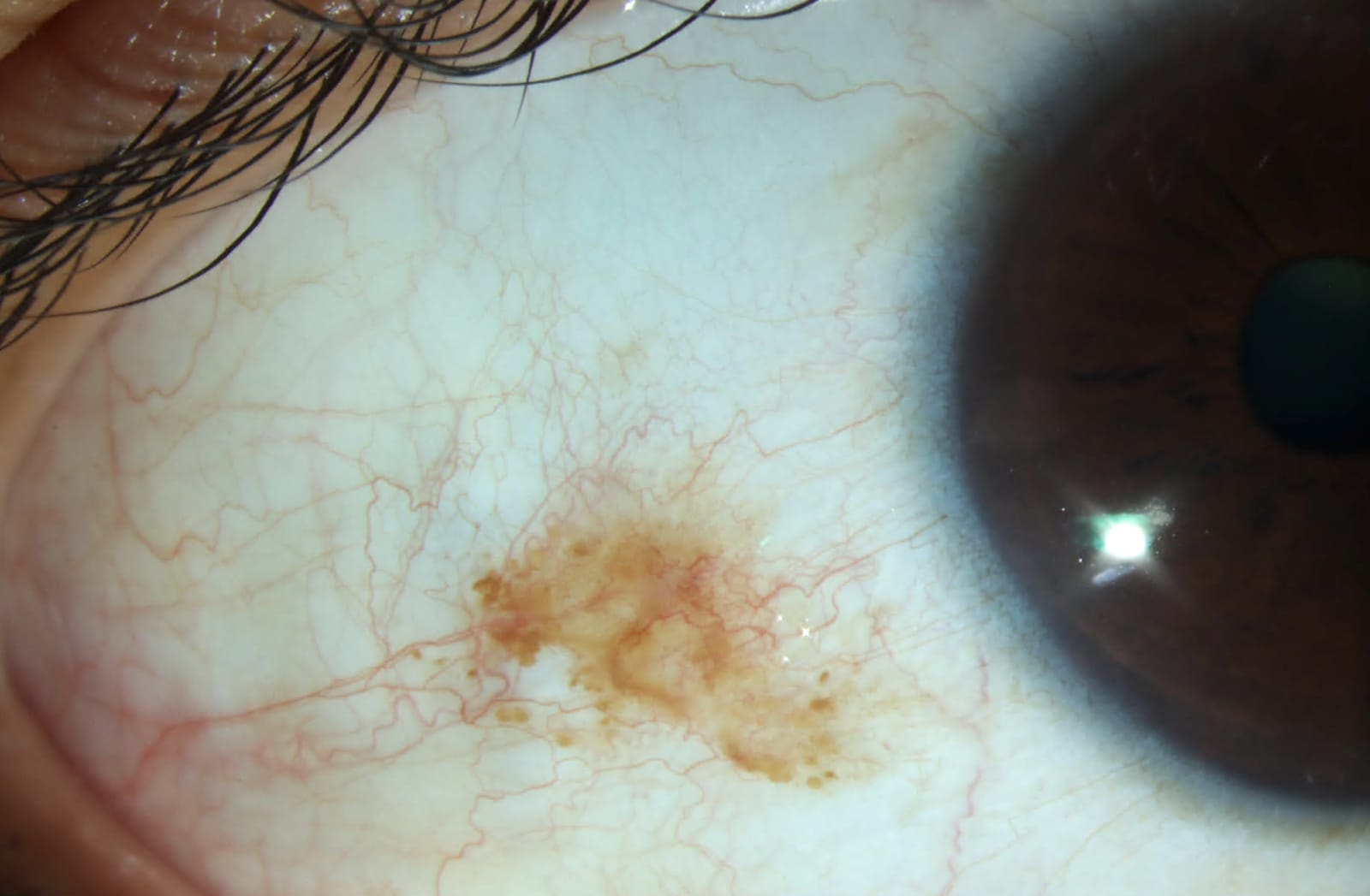
Clinical image — Conjunctival naevus.
Overview

A conjunctival naevus is a benign pigmented lesion of the conjunctiva. It is usually harmless and may be present from childhood or develop later in life. Most naevi remain stable over time.

Although benign, a changing pigmented lesion should be assessed to exclude other conditions, including conjunctival melanoma.

Symptoms

Most conjunctival naevi cause no symptoms and are noticed because of their appearance. They may appear as:

  • A small pigmented spot on the white of the eye
  • A flat or slightly raised lesion
  • A lesion that may contain small cysts
  • Occasionally, mild irritation or cosmetic concern
Risk factors

They may be associated with fair skin, light-coloured eyes, and ultraviolet (UV) exposure. They are often diagnosed during childhood or early adulthood and may become more noticeable with hormonal changes. In most cases, no specific risk factor can be identified.

How is it diagnosed?

Diagnosis is usually made by clinical examination with a slit lamp. High-resolution photography is useful for documenting the lesion and monitoring any changes over time.

Further imaging or biopsy is rarely required, but may be considered if the lesion has atypical features or changes significantly.

Treatment

Most conjunctival naevi do not require treatment and can simply be monitored.

Surgical excision may be considered if the lesion:

  • Changes in size, shape or pigmentation
  • Develops suspicious features
  • Causes significant irritation
  • Is cosmetically concerning

Any excised lesion should be sent for histopathological examination.

When to seek an assessment

You should seek specialist assessment if a conjunctival naevus grows, changes colour or appearance, becomes raised, develops new blood vessels, or becomes symptomatic.

A new or changing pigmented lesion should be assessed by an ophthalmologist, particularly to distinguish a benign naevus from other pigmented lesions.

Key points
  • A conjunctival naevus is a benign pigmented lesion.
  • Conjunctival nevi usually remain stable and require only observation.
  • Photography and regular examination are useful for monitoring changes.
  • A growing or changing lesion should be assessed by an ophthalmologist to exclude malignancy.

Talk it through with Dr. Diafas.

If you notice any changes in the characteristics of the nevus, seek an ophthalmological evaluation.

This page provides general information only and is not a substitute for an individual consultation.

Book an appointment