
Dr. Asterios Diafas
Ocular OncologyVitreoretinal Surgery
+30 694 240 6078asterisdiafas@hotmail.com
Condition · Ocular oncology

Conjunctival melanoma

A rare malignant tumour of the ocular surface.

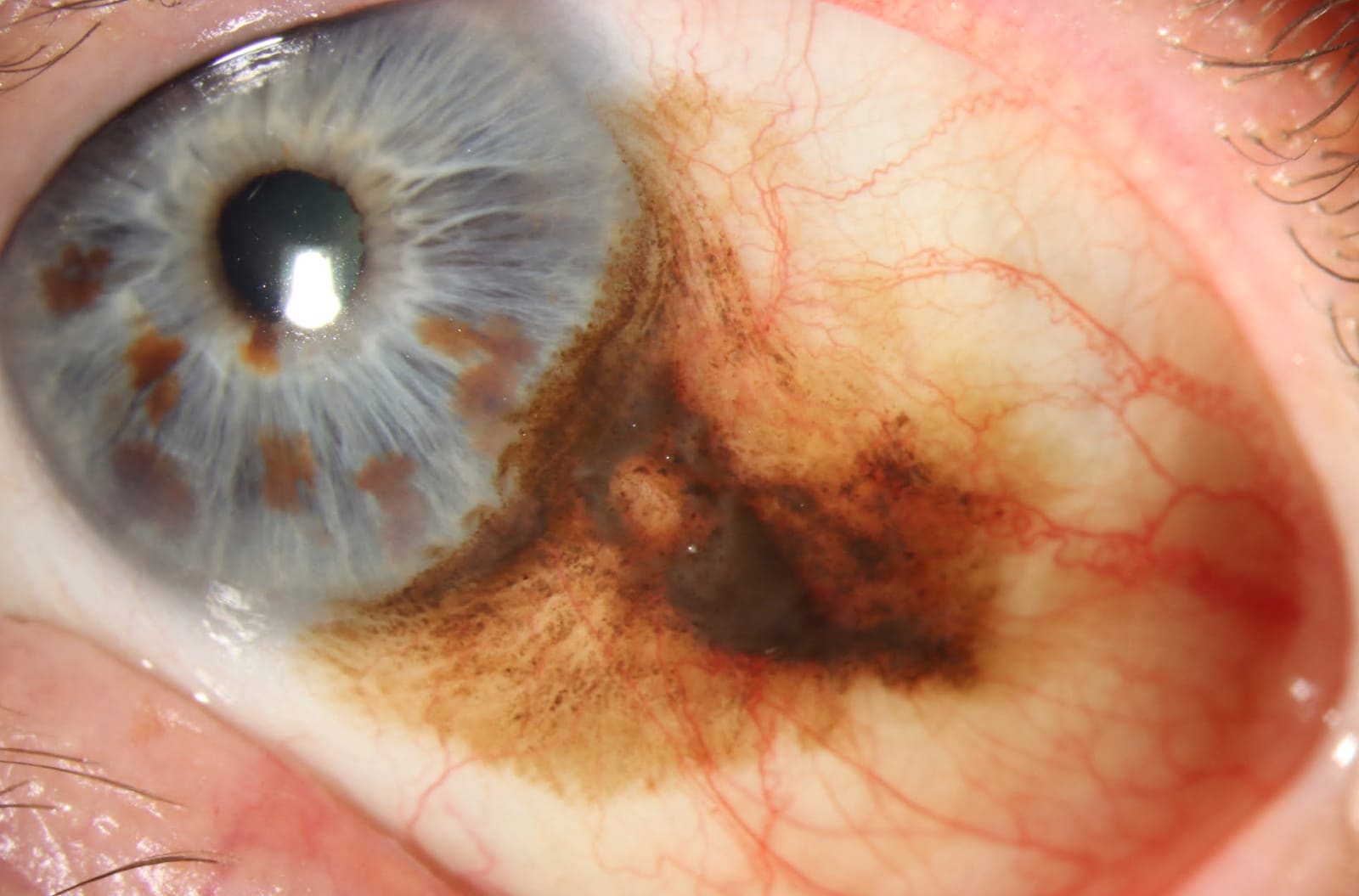
Clinical image — Conjunctival melanoma.
Overview

Conjunctival melanoma is a rare malignant tumour arising from melanocytes in the conjunctiva, the thin transparent membrane covering the white part of the eye. It may develop from a pre-existing pigmented lesion or arise without a previous visible lesion.

Although uncommon, conjunctival melanoma can recur locally and may spread to nearby lymph nodes or, less commonly, other parts of the body. Early diagnosis and specialist treatment are important.

Symptoms

Conjunctival melanoma may appear as:

  • A new or changing pigmented spot on the eye
  • A raised or irregular pigmented lesion
  • Persistent redness or irritation
  • A visible mass on the conjunctiva
  • Occasionally, no symptoms other than a change in appearance
Risk factors

Risk factors associated with conjunctival melanoma include older age, fair skin and light-coloured eyes, prolonged ultraviolet (UV) exposure, and pre-existing conjunctival melanocytic lesions, particularly primary acquired melanosis (PAM) with atypia. A history of ocular or cutaneous melanoma may also be relevant. In some cases, however, no specific risk factor can be identified.

How is it diagnosed?

Diagnosis begins with a detailed ophthalmic examination, often using slit-lamp examination and photography to document the lesion.

Suspicious lesions usually require excisional biopsy or surgical biopsy for histopathological examination. Additional imaging or assessment of nearby lymph nodes may be recommended depending on the characteristics of the tumour.

Treatment

Treatment depends on the size, location and extent of the tumour and may include:

  • Surgical excision with appropriate margins
  • Cryotherapy to the surrounding conjunctiva
  • Amniotic membrane transplantation or other surface reconstruction when required
  • Radiotherapy or other local treatments in selected cases
  • Assessment and treatment of regional lymph nodes when indicated

Long-term ophthalmic follow-up is important because conjunctival melanoma can recur.

When to seek an assessment

You should seek specialist assessment if you notice a new, enlarging or changing pigmented lesion on the conjunctiva, particularly if it becomes raised, develops irregular pigmentation or is associated with persistent redness or irritation.

A specialist ocular oncology assessment is recommended for any suspicious or changing conjunctival pigmented lesion.

Key points
  • Conjunctival melanoma is a rare malignant tumour of the eye surface.
  • A new or changing pigmented lesion on the conjunctiva should be assessed by an ophthalmologist.
  • Surgical excision and histopathological examination are central to diagnosis and treatment.
  • Long-term follow-up is important because the tumour can recur or, less commonly, spread to other parts of the body.

Talk it through with Dr. Diafas.

Because any change in a conjunctival lesion requires prompt ophthalmic assessment.

This page provides general information only and is not a substitute for an individual consultation.

Book an appointment