
Dr. Asterios Diafas
Ocular OncologyVitreoretinal Surgery
+30 694 240 6078asterisdiafas@hotmail.com
Condition · Medical retina · Emergency

Retinal artery occlusion

Retinal vascular occlusion causing sudden vision loss

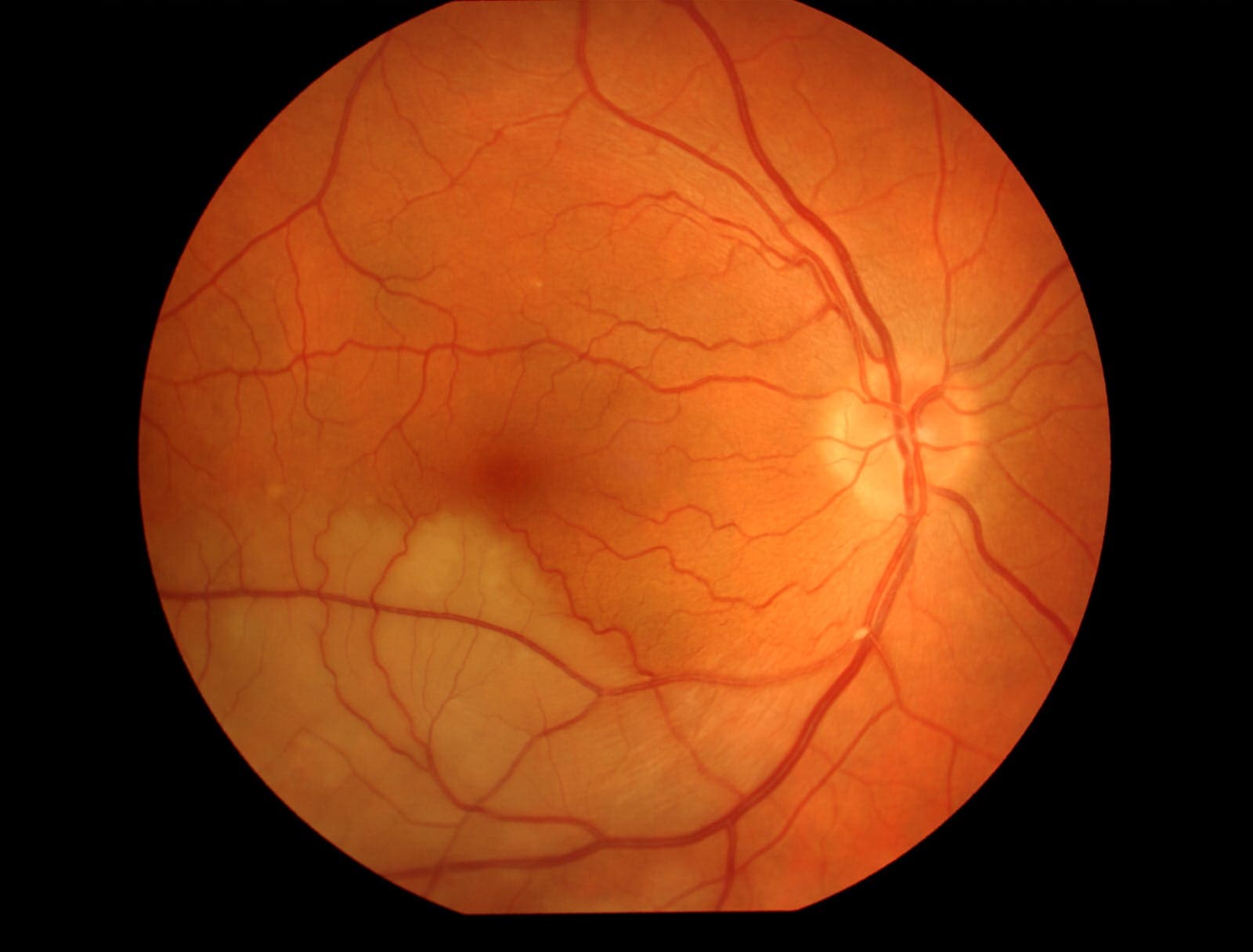
Clinical image — Retinal artery occlusion.
Overview

Retinal artery occlusion occurs when blood flow through an artery supplying the retina is blocked. It causes a sudden loss of vision, usually in one eye, and is considered an ocular emergency.

The blockage is often caused by an embolus or clot originating from the carotid arteries or heart. Retinal artery occlusion may also indicate an increased risk of stroke and requires urgent medical assessment.

Symptoms

Typical symptoms include:

  • Sudden, painless loss or reduction of vision in one eye
  • A missing area of the visual field
  • Blurred or dim vision
  • Usually no pain or redness

The severity depends on which retinal artery is affected and the extent of the blockage.

Risk factors

Retinal artery occlusion is often associated with vascular risk factors, including hypertension, diabetes, high cholesterol, smoking, and cardiovascular disease. In older adults, particularly when compatible symptoms are present, giant cell arteritis should also be ruled out, as its diagnosis requires immediate systemic treatment.

How is it diagnosed?

Diagnosis is based on the clinical examination and retinal imaging, including fundus photography and OCT. OCT angiography or fluorescein angiography may provide additional information about retinal blood flow.

Urgent systemic assessment is usually required to identify possible sources of emboli and cardiovascular or vascular risk factors.

Treatment

Retinal artery occlusion requires urgent assessment, although established retinal damage may not be reversible.

Management may include:

  • Urgent stroke or vascular assessment
  • Investigation and treatment of cardiovascular risk factors
  • Management of the underlying cause
  • In selected cases, acute treatments may be considered depending on the timing and type of occlusion

Long-term management focuses on reducing the risk of further vascular events.

When to seek an assessment

Any sudden, painless loss or significant reduction of vision in one eye should be treated as an emergency.

Immediate assessment is important because retinal artery occlusion may be associated with a serious underlying vascular condition or an increased risk of stroke.

Key points
  • Retinal artery occlusion causes sudden, usually painless loss of vision.
  • It is an ocular and vascular emergency requiring urgent assessment.
  • Investigation should look for an underlying cardiovascular or vascular cause.
  • Η έγκαιρη διάγνωση είναι σημαντική για την πρόληψη νέων αγγειακών επεισοδίων.

Talk it through with Dr. Diafas.

For immediate assessment and treatment, go without delay to the nearest emergency department. For specialist follow-up or a second opinion, book an appointment.

This page provides general information only and is not a substitute for an individual consultation.

Book an appointment